

Hey there! As a supplier of medical surgical staplers, I often get asked a bunch of questions about where our products can be used. One question that pops up quite a bit is, "Can medical surgical staplers be used in orthopedic surgeries?" Let's dig into this topic and find out.
First off, let's talk about what medical surgical staplers are. These are nifty tools that are used in surgeries to close wounds or join tissues together. They work by driving staples through the tissues, kind of like a regular stapler you'd use in an office, but way more high - tech and designed for medical use. We offer a wide range of staplers, like the New Design Surgery Medical Disposable Trocar, Disposable Medical PPH Hemorrhoid Stapler, and Disposable Medical Hemorrhoid Multi - band Ligature with Anoscope.
Now, onto orthopedic surgeries. Orthopedic surgeries deal with the musculoskeletal system, which includes bones, joints, ligaments, tendons, and muscles. Traditionally, orthopedic surgeons have used methods like sutures, screws, plates, and pins to fix bones and repair tissues. But in recent years, there's been some exploration into using surgical staplers in this field.
One of the main advantages of using surgical staplers in orthopedic surgeries is the speed. Stapling can be much faster than suturing. In a busy operating room, where time is of the essence, a faster closure method can reduce the overall surgery time. This is not only beneficial for the patient, as they spend less time under anesthesia, but also for the surgical team, who can move on to the next case more quickly.
Another advantage is the consistency of the staple application. A good surgical stapler can ensure that each staple is placed at the right depth and with the right amount of force. This can lead to more uniform wound closure, which may result in better healing. In orthopedic surgeries, especially those involving soft tissues around the joints, a consistent closure can help maintain the integrity of the joint and improve the patient's post - operative mobility.
However, there are also some challenges when it comes to using surgical staplers in orthopedic surgeries. One of the biggest issues is the type of tissue. Bones are hard and dense, and most surgical staplers are designed for soft tissues like skin, muscle, and internal organs. Trying to staple through bone is a whole different ballgame. The staples need to be strong enough to penetrate the bone without breaking, and the stapler needs to be able to generate enough force.
Also, the anatomy in orthopedic surgeries can be quite complex. Joints have a lot of different structures, and there's a risk of damaging important nerves, blood vessels, or other tissues when using a stapler. Surgeons need to be very careful and have a good understanding of the stapler's capabilities and limitations.
In some orthopedic procedures, like soft - tissue repair around the bones, surgical staplers can be a great option. For example, when repairing a torn ligament or tendon, a stapler can quickly and effectively close the wound. But for bone - to - bone fixation, staplers are still not as commonly used as screws and plates.
Let's look at some real - world examples. In some minor orthopedic procedures, such as closing small incisions after a minimally invasive arthroscopic surgery, surgical staplers have been used successfully. The staples can provide a quick and reliable closure of the skin, and the patient can go home sooner.
But in major joint replacement surgeries, like a total hip or knee replacement, the use of staplers is still limited. The focus in these surgeries is on precise bone - to - bone and bone - to - implant fixation, which is usually achieved with screws and cement.
So, can medical surgical staplers be used in orthopedic surgeries? The answer is yes, but with some limitations. They can be a valuable tool in certain orthopedic procedures, especially those involving soft - tissue repair. But for more complex bone - related surgeries, traditional methods still reign supreme.

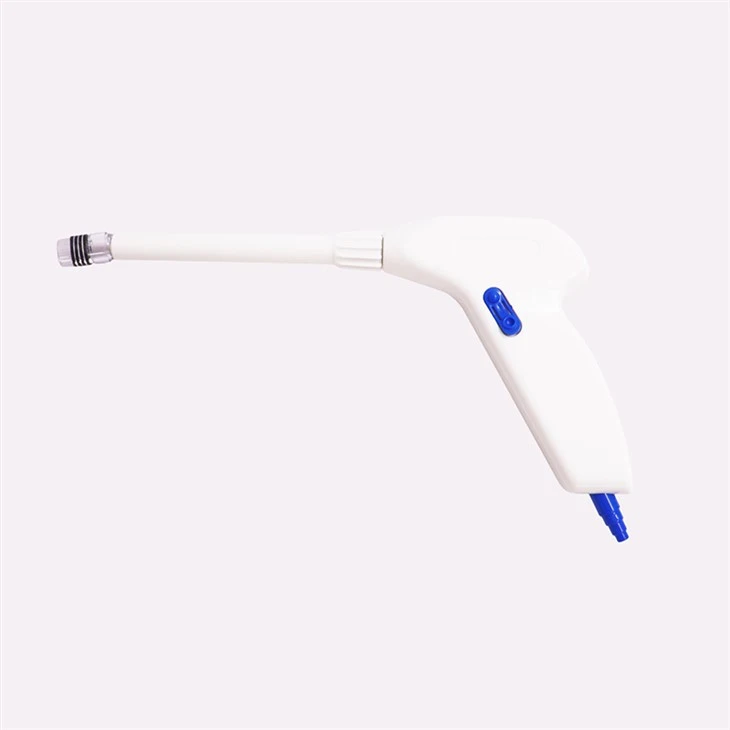
As a supplier, we're constantly looking for ways to improve our products and make them more suitable for different types of surgeries. We're working on developing staplers that can handle the unique challenges of orthopedic surgeries, such as stronger staples and more powerful stapling mechanisms.
If you're in the medical field and are interested in exploring the use of surgical staplers in orthopedic surgeries, or any other type of surgery for that matter, we'd love to have a chat with you. We can provide you with more information about our products, answer your questions, and even arrange for a demonstration. Whether you're a surgeon, a hospital administrator, or a procurement officer, we're here to help you find the right surgical stapler for your needs. So, don't hesitate to reach out and start a conversation about how our products can fit into your surgical practice.
References
- Smith, J. (2020). Advances in Surgical Stapling Technology. Journal of Medical Devices.
- Johnson, A. (2019). Orthopedic Surgical Techniques: A Comprehensive Guide. Medical Publishing House.