

Hey there! As a supplier of disposable endoscopic injection needles, I'm often asked about what these needles are made of. So, let's dig into the materials that make up these nifty medical tools.
The Basics: Why Material Matters
First off, why does the material of a disposable endoscopic injection needle matter? Well, these needles are used in delicate endoscopic procedures, where precision and safety are super important. They need to be strong enough to penetrate tissue without breaking, flexible to navigate the twists and turns inside the body, and biocompatible so they don't cause any adverse reactions in the patient.
The Key Components and Their Materials
Needle Tip
The needle tip is probably the most crucial part of the injection needle. It needs to be sharp to make a clean puncture. Most commonly, the needle tip is made of stainless steel. Stainless steel is a great choice because it's strong, corrosion - resistant, and can be sharpened to a fine point. Its durability ensures that the tip won't dull easily during the procedure. Plus, it can withstand the sterilization processes that are required for medical instruments.
Another advantage of stainless steel is that it's biologically inert. That means it won't react with the body's tissues or fluids, which reduces the risk of infections or other complications. For example, when using the needle to inject medications or dyes into the digestive tract during an endoscopic procedure, a stainless - steel tip provides a reliable and safe interface between the needle and the patient.
Shaft
The shaft of the disposable endoscopic injection needle also has some special requirements. It needs to be flexible but still maintain its shape. Many needles have a shaft made of a polymer material. A common polymer used is polyamide, also known as nylon.
Polyamide shafts are flexible, which allows them to bend and follow the natural curves of the endoscope as it moves through the body. This flexibility is essential for reaching difficult - to - access areas during an endoscopic examination. At the same time, polyamide is strong enough to prevent kinking, which could block the flow of the injected material.
For instance, in a colonoscopy, a needle with a polyamide shaft can easily maneuver around the bends of the colon to deliver an injection exactly where it's needed. And because it's disposable, there's no worry about cleaning and re - sterilizing it for future use, which saves both time and resources for medical facilities.
Hub
The hub is the part of the needle where the syringe is attached. It needs to provide a secure connection to prevent any leakage of the injected material. Usually, the hub is made of a hard plastic, such as polycarbonate.
Polycarbonate is a tough and rigid material, which ensures that the connection between the needle and the syringe is stable. It can withstand the pressure exerted when the syringe is squeezed to push the fluid through the needle. Also, polycarbonate is clear, which allows medical staff to see if there are any air bubbles in the system before the injection.
Comparing with Other Endoscopic Instruments
Now, let's talk a bit about how the materials of disposable endoscopic injection needles compare with other endoscopic instruments. There are other surgical tools in the endoscopic field, like Surgical Instruments Disposable Endoscope Sampling Forceps, Disposable Medical Surgery Hot Biopsy Forceps, and Foreign Body Forceps for Endoscopy.
The sampling forceps also often use stainless steel for their jaws because they need to cut and grasp tissue. However, the handling part of these forceps might be made of different polymers that are more focused on providing a good grip for the medical professional.
Disposable hot biopsy forceps have a similar structure to sampling forceps. The hot part, which is used for cauterization during the biopsy, is usually made of a special alloy that can conduct electricity and generate heat.
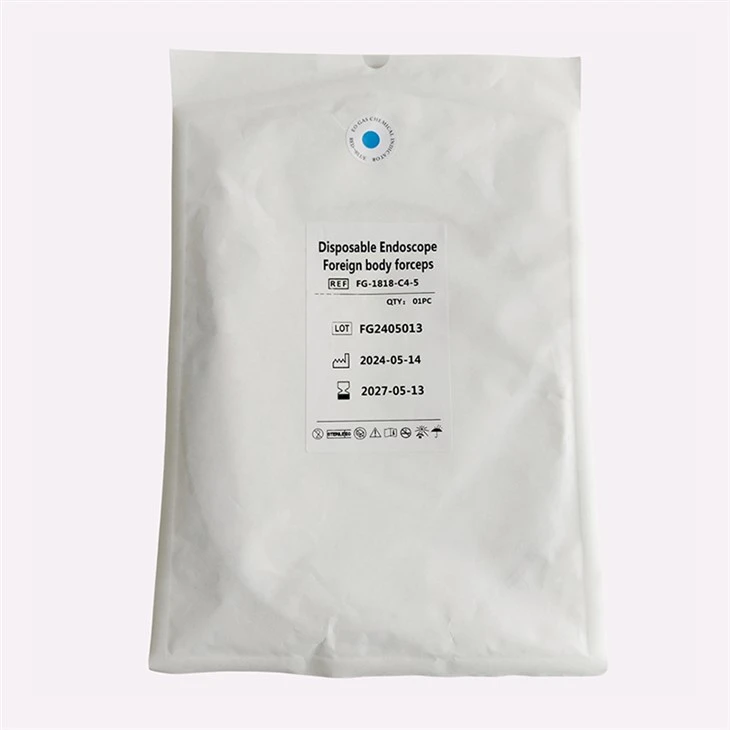
Foreign body forceps for endoscopy also need to be strong and precise. Their tips are often made of stainless steel for gripping, and the shafts are made of materials that provide flexibility and control, similar to the injection needles. But the overall design and functional requirements mean that they might use a slightly different combination of materials.

Quality Control and Material Safety
As a supplier, we take quality control and material safety very seriously. Every batch of our disposable endoscopic injection needles goes through strict testing to ensure that the materials meet the highest medical standards. We check the sharpness of the needle tip, the flexibility of the shaft, and the integrity of the hub connection.
We also make sure that all the materials are free from any harmful substances. For example, the stainless steel used in the needle tip is carefully selected to be free from heavy metals that could leach into the patient's body. The polymers used in the shaft and hub are also tested for biocompatibility to ensure that they won't cause any allergic reactions or other negative effects.
Why Choose Our Disposable Endoscopic Injection Needles
When you're looking for a reliable source of disposable endoscopic injection needles, there are a few reasons to consider us. First, our needles are made from high - quality materials that have been proven to work well in real - world medical scenarios. The combination of stainless steel, polyamide, and polycarbonate gives our needles the durability, flexibility, and safety they need.
Second, as a supplier, we understand the importance of timely delivery. We have a well - organized supply chain that ensures you get your order when you need it. And because our needles are disposable, you don't have to worry about the hassle of cleaning and re - sterilization, which can save your medical facility a lot of time and money.
Let's Connect!
If you're in the market for high - quality disposable endoscopic injection needles or any other related endoscopic instruments, I'd love to talk to you. Whether you're a small clinic or a large hospital, we can provide you with the products you need at a competitive price. Don't hesitate to reach out for a quote or to discuss your specific requirements. Let's work together to make your endoscopic procedures as safe and efficient as possible.
References
- Medical Device Materials Handbook, edited by G. J. McGuire.
- Journal of Endoscopic Surgery and Allied Technologies.
- "Materials Science in Medical Devices" by M. R. Wertheimer.