

The cooling water flow rate of the Low Speed Dental External Series Handpiece is a crucial factor that directly impacts its performance and the overall dental treatment experience. As a supplier of these high - quality dental handpieces, understanding and communicating this aspect is of utmost importance.
The Significance of Cooling Water in Dental Handpieces
In dental procedures, the use of handpieces generates a significant amount of heat. This heat can come from the friction between the dental bur and the tooth structure, as well as the mechanical operation of the handpiece itself. Excessive heat can cause damage to the tooth pulp, leading to patient discomfort and potential long - term dental problems. Cooling water serves as a heat dissipating agent, maintaining the temperature within a safe range during the treatment.
For the Low Speed Dental External Series Handpiece, proper cooling ensures not only the well - being of the patient but also the longevity of the handpiece. Overheating can cause wear and tear on the internal components of the handpiece, such as the bearings and gears, reducing its lifespan and increasing the need for frequent repairs.
Optimal Cooling Water Flow Rate
The optimal cooling water flow rate for the Low Speed Dental External Series Handpiece typically ranges from 8 to 15 milliliters per minute (ml/min). This range has been determined through extensive research and practical experience in the dental industry.
At a flow rate of around 8 ml/min, there is sufficient water to start dissipating the heat generated during normal low - speed dental operations. This is suitable for relatively gentle procedures, such as light polishing or minor cavity preparations. The water forms a thin film around the dental bur, effectively carrying away the heat and preventing it from accumulating on the tooth surface.
As the complexity of the dental procedure increases, a higher flow rate may be required. For more aggressive cavity preparations or when using larger dental burs, a flow rate closer to 15 ml/min is recommended. This increased flow ensures that even with the higher heat generation, the temperature remains under control.
However, it's important to note that the ideal flow rate can also be influenced by other factors. The type of dental material being worked on, for example, can affect the heat generation rate. Harder materials like enamel may require a slightly higher flow rate compared to softer dentin. Additionally, the speed setting of the handpiece can play a role. Higher speeds generally generate more heat, and thus may need a greater cooling water flow.
Measuring and Adjusting the Flow Rate
To ensure that the cooling water flow rate is within the optimal range, dental professionals need to be able to measure and adjust it. Most modern dental units are equipped with flow rate control mechanisms. These can be in the form of adjustable valves or digital settings.
To measure the flow rate, a simple method is to use a graduated cylinder. Place the cylinder under the water outlet of the handpiece and run the water for a specific period, usually one minute. Then, measure the volume of water collected in the cylinder. If the measured flow rate is outside the recommended range, adjustments can be made using the flow control mechanism on the dental unit.
Comparison with Other Dental Handpieces
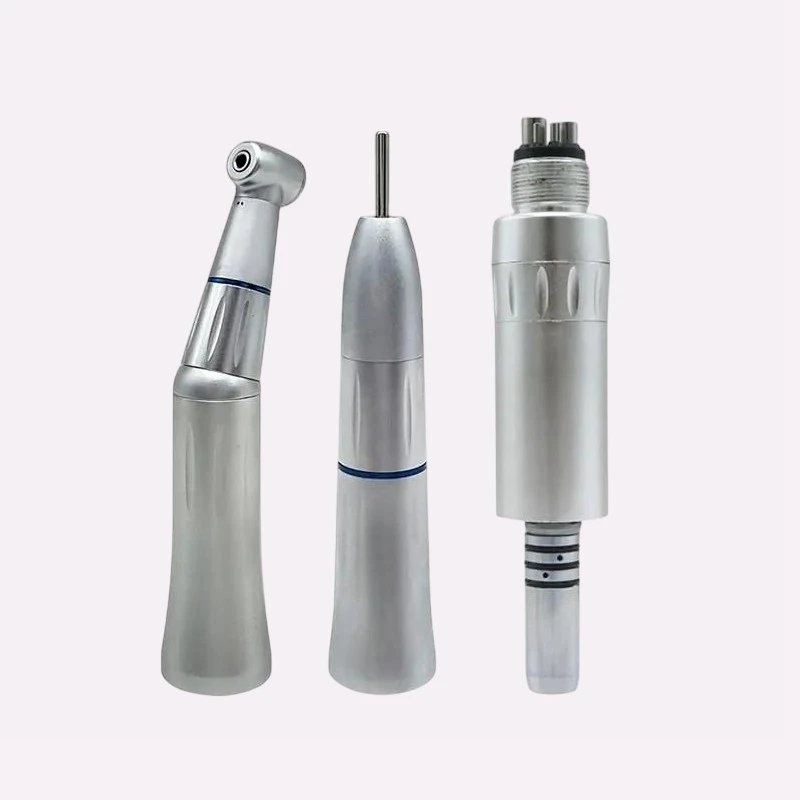
When comparing the Low Speed Dental External Series Handpiece with other types of dental handpieces, such as the Dental Equipment Increasing Contra Angle Handpiece, Internal Series Dental Handpiece, and Root Canal Treatment Reduction Dental Handpiece, there are some differences in cooling water requirements.
The Contra Angle Handpiece, which is often used for more precise and hard - to - reach areas, may have a slightly lower optimal flow rate due to its smaller working area and generally lower heat generation. On the other hand, the Root Canal Treatment Reduction Dental Handpiece, which is used for more intensive root canal procedures, may require a higher flow rate to handle the increased heat generated during the removal of pulp and shaping of the root canal.
Impact on Dental Practice
Maintaining the correct cooling water flow rate in the Low Speed Dental External Series Handpiece has a significant impact on the dental practice. From a patient perspective, it enhances comfort. Patients are less likely to experience pain or sensitivity during the treatment when the tooth is properly cooled. This can lead to better patient satisfaction and a more positive perception of the dental practice.
For dental professionals, it improves the quality of the treatment. With proper cooling, the dental bur can work more efficiently, resulting in smoother and more accurate cavity preparations or other dental procedures. It also reduces the risk of damage to the handpiece, which means less downtime for repairs and lower long - term costs.
Ensuring Consistent Performance
As a supplier of the Low Speed Dental External Series Handpiece, we are committed to ensuring that our products deliver consistent performance in terms of cooling water flow rate. Our handpieces are designed with high - quality internal components that are precision - engineered to work in harmony with the cooling water system.
We also provide comprehensive training and support to dental professionals on how to properly use and maintain the handpieces, including how to adjust and monitor the cooling water flow rate. Our technical team is always available to answer any questions and provide on - site assistance if needed.
Conclusion
In conclusion, the cooling water flow rate of the Low Speed Dental External Series Handpiece is a vital aspect that affects both patient comfort and the quality of dental treatment. By maintaining the flow rate within the optimal range of 8 to 15 ml/min, dental professionals can ensure a safe and effective treatment environment.
If you are interested in our Low Speed Dental External Series Handpiece or have any questions regarding the cooling water flow rate or other aspects of our products, we invite you to reach out to us for further discussion. We are eager to engage in procurement discussions and help you find the best dental solutions for your practice.
References
- Dental Equipment Handbook, 3rd Edition, [Publisher Name]
- Journal of Dental Research, Vol. [Volume Number], Issue [Issue Number], [Year]
- International Dental Journal, [Year], [Article Title]