

What are the Temperature Rise Characteristics of High Speed Handpieces?
As a leading provider of high speed handpieces, I've witnessed firsthand the critical role these tools play in the dental industry. The efficiency and reliability of high speed handpieces are directly influenced by their temperature rise characteristics. In this blog, I'll delve into the key aspects of temperature rise in high speed handpieces, including the factors that contribute to it, its effects on performance, and how to manage it effectively.
Factors Contributing to Temperature Rise
Several factors can lead to an increase in temperature within high speed handpieces during operation. One of the primary causes is friction. As the turbine rotates at high speeds, there is friction between the moving parts, such as the bearings and the turbine blades. This friction generates heat, which can cause the temperature of the handpiece to rise. The higher the rotational speed of the turbine, the greater the friction and the more heat is produced.
Another significant factor is the air flow. High speed handpieces rely on compressed air to drive the turbine. If the air flow is restricted or uneven, it can lead to inefficient cooling of the handpiece. The compressed air is not only used to power the turbine but also to carry away the heat generated during operation. When the air flow is inadequate, the heat cannot be dissipated effectively, resulting in a temperature increase.
The type of material used in the construction of the handpiece also plays a role in temperature rise. Some materials have better heat conductivity than others. For example, handpieces made of metals with high thermal conductivity, such as aluminum, can transfer heat more efficiently from the internal components to the outer surface, where it can be dissipated into the surrounding environment. On the other hand, handpieces made of materials with low thermal conductivity may trap heat inside, leading to a higher temperature rise.
Effects of Temperature Rise on Performance
Excessive temperature rise in high speed handpieces can have several negative effects on their performance. Firstly, it can cause damage to the internal components. High temperatures can lead to the expansion of metals, which can affect the precision of the moving parts. This can result in increased wear and tear, reduced lifespan of the handpiece, and even mechanical failures. For example, the bearings may become misaligned or damaged due to the thermal expansion, leading to a decrease in the smoothness of the turbine rotation.
Secondly, temperature rise can affect the efficiency of the handpiece. As the temperature increases, the viscosity of the lubricants used in the handpiece may change. Lubricants are essential for reducing friction between the moving parts. However, if the temperature is too high, the lubricants may break down or become less effective, increasing the friction and reducing the power output of the handpiece. This can result in slower cutting speeds and reduced performance during dental procedures.
In addition, high temperatures can also be uncomfortable for the dentist and the patient. The heat can be transferred to the handle of the handpiece, making it hot to hold. This can cause fatigue and discomfort for the dentist, especially during long procedures. For the patient, the heat can be felt in the mouth, which can be unpleasant and may even cause tissue damage in extreme cases.
Managing Temperature Rise
To ensure the optimal performance and longevity of high speed handpieces, it is essential to manage the temperature rise effectively. One of the most common methods is to use a cooling system. Most high speed handpieces are equipped with a water spray system. The water spray not only helps to cool the cutting site but also the internal components of the handpiece. The water absorbs the heat generated during operation and carries it away, reducing the temperature of the handpiece.
Proper maintenance is also crucial for managing temperature rise. Regular cleaning and lubrication of the handpiece can help to reduce friction and ensure smooth operation. It is important to follow the manufacturer's recommendations for maintenance, including the frequency of cleaning and the type of lubricant to use. Additionally, checking the air flow regularly and ensuring that it is unrestricted can help to maintain efficient cooling of the handpiece.
Choosing the right handpiece for the specific dental procedure can also play a role in managing temperature rise. Different handpieces have different temperature rise characteristics. For example, some handpieces are designed for high torque applications, while others are more suitable for high speed, low torque procedures. By selecting the appropriate handpiece, the dentist can minimize the heat generated during operation.
Our High Speed Handpieces
At our company, we offer a wide range of high speed handpieces with excellent temperature rise characteristics. Our Nsk Type Quick Coupling E - generator LED Handpiece is designed with advanced cooling technology to ensure efficient heat dissipation. The LED lighting system not only provides clear visibility during dental procedures but also does not contribute significantly to the temperature rise of the handpiece.
Our Dental Handpiece Three - point Water Spray Dental High Speed Handpiece features a three - point water spray system, which provides more effective cooling compared to traditional single - point water spray systems. The water is evenly distributed around the cutting site and the internal components of the handpiece, reducing the temperature rise and ensuring smooth operation.

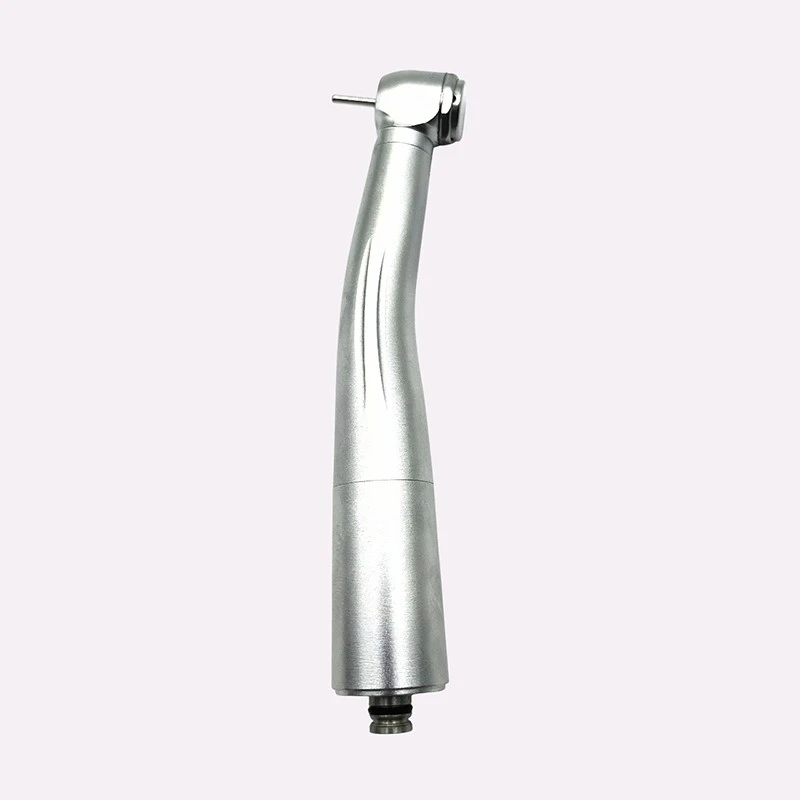
The Dental Air Turbine Handpiece Fiber Optic High Speed Handpiece is another popular option. It uses high - quality materials with good thermal conductivity and a well - designed air flow system to minimize temperature rise. The fiber optic lighting system provides bright and focused illumination without adding excessive heat.
Conclusion
Understanding the temperature rise characteristics of high speed handpieces is essential for ensuring their optimal performance and longevity. By being aware of the factors that contribute to temperature rise, its effects on performance, and how to manage it effectively, dentists can make informed decisions when selecting and using high speed handpieces. At our company, we are committed to providing high - quality handpieces with excellent temperature management features. If you are interested in our products or have any questions about high speed handpieces, please feel free to contact us for further discussion and potential procurement. We look forward to serving you and meeting your dental equipment needs.
References
- Dental Handpiece Technology: Principles and Practice. Second Edition.
- Journal of Dental Research: Studies on the Thermal Characteristics of High Speed Handpieces.