

What are the international standards for low speed handpieces?
As a supplier of low speed handpieces, I've witnessed firsthand the critical role these tools play in the dental industry. Low speed handpieces are essential for a variety of dental procedures, from prophylaxis to endodontics. Understanding the international standards that govern these devices is not only crucial for manufacturers but also for dental professionals who rely on them for patient care.
ISO Standards
The International Organization for Standardization (ISO) sets the global benchmarks for low speed handpieces. ISO 3630 - 1:2016 is the primary standard that addresses the general requirements and test methods for low speed dental handpieces. This standard covers aspects such as dimensions, performance, safety, and labeling.
In terms of dimensions, ISO 3630 - 1 specifies the size and shape of the handpiece, ensuring compatibility with other dental equipment and accessories. For example, the connection between the handpiece and the motor or turbine must meet precise specifications to ensure a secure and reliable fit. This standardization allows dental professionals to interchange handpieces and components from different manufacturers, promoting flexibility and efficiency in the dental practice.
Performance is another key area covered by ISO standards. The standard defines the minimum and maximum rotational speeds for low speed handpieces. Typically, low speed handpieces operate at speeds ranging from 10,000 to 40,000 revolutions per minute (RPM). This range is suitable for tasks that require more control and precision, such as removing decay, polishing teeth, and performing root canal procedures. ISO also sets requirements for torque, which is the rotational force generated by the handpiece. Adequate torque is necessary to ensure that the handpiece can effectively cut through dental materials without stalling.
Safety is of utmost importance in the dental industry, and ISO standards reflect this. The standard mandates that low speed handpieces must be designed and constructed to prevent the ingress of fluids, such as saliva and water, into the internal components. This helps to prevent contamination and the spread of infection. Additionally, the handpiece must be able to withstand sterilization processes, such as autoclaving, without compromising its performance or safety.
Labeling requirements are also specified in ISO 3630 - 1. The handpiece must be clearly marked with information such as the manufacturer's name, model number, serial number, and the maximum recommended rotational speed. This information allows dental professionals to identify the handpiece and ensure that it is used correctly and safely.
Other International Standards
In addition to ISO standards, there are other international standards that may apply to low speed handpieces. For example, the European Union's Medical Device Directive (MDD) and its successor, the Medical Device Regulation (MDR), set requirements for the safety and performance of medical devices, including dental handpieces. These regulations ensure that low speed handpieces sold in the EU meet high - quality standards and are safe for use in dental procedures.
In the United States, the Food and Drug Administration (FDA) regulates dental handpieces as medical devices. The FDA requires manufacturers to submit pre - market notifications or pre - market approvals, depending on the risk classification of the handpiece. This process helps to ensure that low speed handpieces available in the US market are safe and effective.
Our Low Speed Handpieces and Compliance
At our company, we are committed to producing low speed handpieces that meet or exceed international standards. Our Dental Low Speed Handpiece Motor is designed with precision and reliability in mind. It offers a smooth and consistent rotational speed within the range specified by ISO standards, providing dental professionals with the control they need for delicate procedures.
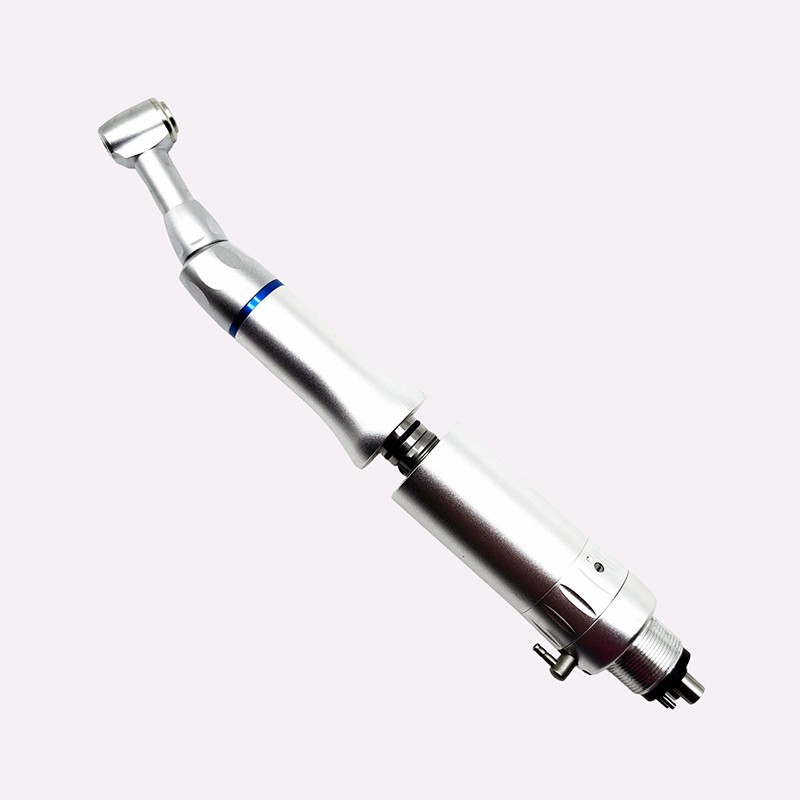
Our Dental Equipment Increasing Contra Angle Handpiece is another product that adheres to strict international standards. The contra - angle design allows for better access to hard - to - reach areas in the mouth, and it is built to withstand the rigors of daily use in a dental practice.
The Low Speed Dental External Series Handpiece is also a testament to our commitment to quality. It is made from high - quality materials that are resistant to corrosion and wear, ensuring a long lifespan. This handpiece is easy to clean and sterilize, meeting the safety requirements set by international standards.

Importance of International Standards for Dental Professionals
For dental professionals, using low speed handpieces that comply with international standards is essential. These standards ensure that the handpieces are safe, reliable, and perform consistently. When dental professionals choose handpieces that meet ISO and other international standards, they can have confidence in the quality of the equipment they are using. This, in turn, leads to better patient outcomes and a more efficient dental practice.
International standards also provide a level playing field for manufacturers. By adhering to the same set of standards, manufacturers can compete based on the quality and innovation of their products rather than cutting corners on safety and performance. This encourages continuous improvement in the design and manufacturing of low speed handpieces, benefiting both dental professionals and patients.
Contact for Purchase and Collaboration
If you are a dental professional or a distributor interested in our low speed handpieces, we invite you to contact us for more information. Our team of experts is ready to assist you in selecting the right handpieces for your needs. Whether you are looking for a reliable motor, a versatile contra - angle handpiece, or an external series handpiece, we have the products to meet your requirements.
We believe in building long - term relationships with our customers based on trust and quality. Our low speed handpieces are not only compliant with international standards but also offer excellent value for money. So, if you are in the market for high - quality low speed handpieces, don't hesitate to reach out to us. We look forward to the opportunity to work with you and contribute to the success of your dental practice.
References
- ISO 3630 - 1:2016, Dentistry - Handpieces - Part 1: Low - speed handpieces
- European Union Medical Device Regulation (MDR)
- US Food and Drug Administration (FDA) regulations on dental devices