

Endoscopic stone removal is a minimally invasive procedure widely used in urology and gastroenterology to remove stones from the urinary tract and biliary system. Endoscopic stone removal baskets are essential tools in these procedures, designed to grasp and retrieve stones. However, when dealing with difficult cases, the use of these baskets poses several challenges that can significantly impact the success of the procedure. As a trusted supplier of Endoscopic Stone Removal Baskets, we understand these challenges and are committed to providing solutions to overcome them.

1. Technical Complexities in Stone Capture
One of the primary challenges in using an endoscopic stone removal basket in difficult cases is the technical complexity of capturing the stone. In some instances, stones may be located in anatomically challenging positions, such as within calyceal diverticula or buried in mucosal folds. The irregular shape and surface texture of the stones can also make them difficult to grasp. For example, staghorn calculi, which are large, branched stones, present a significant challenge due to their complex morphology. The basket may have difficulty engaging all parts of the stone, leading to incomplete capture and potential stone fragmentation during retrieval.
To address these challenges, our Endoscopic Stone Removal Baskets are designed with advanced features. They have flexible tips and expandable configurations, allowing for better maneuverability in tight spaces and around irregularly shaped stones. Our baskets are also equipped with high - strength wires and precise locking mechanisms to ensure a secure grip on the stone, reducing the risk of slippage.
2. Stone Fragmentation
Stone fragmentation can occur during the process of using an endoscopic stone removal basket, especially when dealing with hard or large stones. Fragmentation can be caused by excessive force during basket manipulation or when the stone is resistant to capture. The presence of stone fragments can complicate the procedure as they are more difficult to retrieve and may scatter throughout the urinary or biliary tract. Small fragments may also pass unnoticed and lead to recurrent stone formation in the future.
Our Endoscopic Stone Removal Baskets are designed to minimize the risk of stone fragmentation. The material used in our baskets has the appropriate elasticity and strength to deform around the stone without causing excessive pressure that could lead to fragmentation. Additionally, our baskets are designed to gradually and gently enclose the stone, reducing the likelihood of sudden breaks.
3. Basket Entanglement
Basket entanglement is another significant challenge in difficult cases. This can occur when the basket comes into contact with other endoscopic instruments, tissue, or even the stone itself in an improper way. For example, in cases where there are multiple stones or debris in the area, the basket may become entangled with these elements, making it difficult to retrieve the targeted stone. Entanglement can also lead to damage to the basket, which may require additional endoscopic maneuvers to disentangle or even replacement of the basket, prolonging the procedure and increasing the risk to the patient.
To mitigate the risk of basket entanglement, our Endoscopic Stone Removal Baskets are engineered with smooth surfaces and well - designed wire configurations. The shape of the basket is optimized to minimize the chances of it getting caught on other objects. We also provide training and support materials to our customers on proper basket handling techniques to reduce the incidence of entanglement.
4. Anatomical Variations
Anatomical variations in patients can create challenges when using an endoscopic stone removal basket. For example, some patients may have congenital abnormalities in the urinary or biliary tract, such as a narrow ureter or a tortuous bile duct. These variations can make it difficult to navigate the basket to the stone location and may limit the basket's ability to open and function properly. In some cases, the anatomical structure may also increase the risk of trauma to the surrounding tissue during basket manipulation.
Our company offers a range of Endoscopic Stone Removal Baskets in different sizes and configurations to accommodate various anatomical variations. We also collaborate closely with medical professionals to develop customized solutions for patients with complex anatomical features. By providing a diverse product portfolio, we aim to ensure that our customers can select the most suitable basket for each patient's unique situation.
5. Interaction with Other Endoscopic Equipment
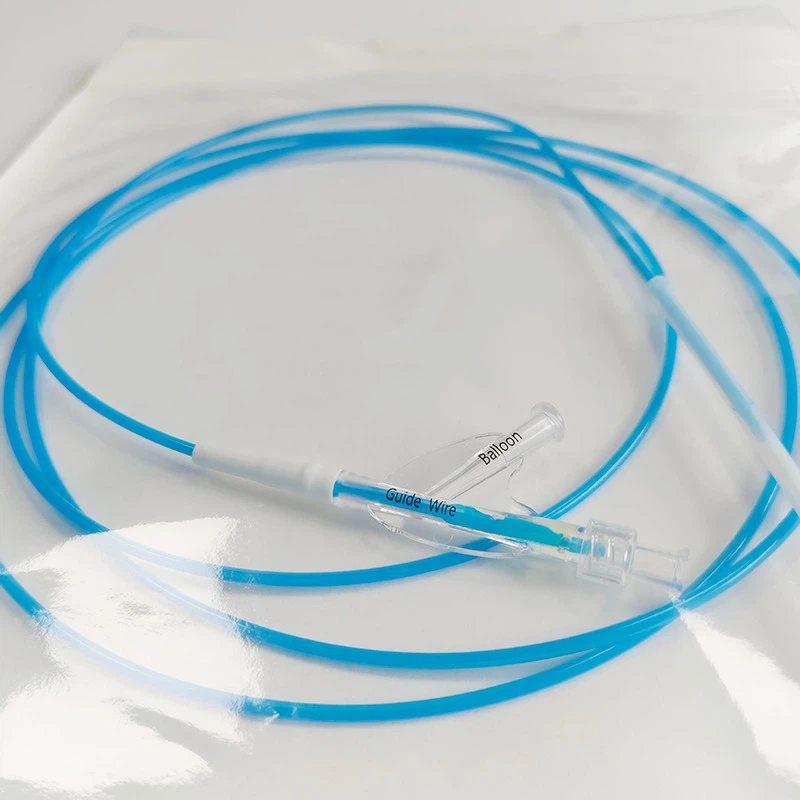
In endoscopic stone removal procedures, the stone removal basket often needs to work in conjunction with other endoscopic equipment, such as Endoscopic Spray Catheter, Foreign Body Forceps for Endoscopy, and Medical Medical Balloon Dilatation Dilation Balloon Catheter. Coordinating the use of these different tools can be challenging, especially in difficult cases. For example, when using a balloon catheter for dilation before stone retrieval, the basket may need to be carefully inserted and maneuvered without interfering with the balloon.
Our Endoscopic Stone Removal Baskets are designed to be compatible with a wide range of endoscopic equipment. We provide detailed information on the compatibility of our products with other instruments, and our technical support team is available to assist medical professionals in coordinating the use of different tools during the procedure.
6. Operator Skill and Experience
The success of using an endoscopic stone removal basket in difficult cases is highly dependent on the operator's skill and experience. Inexperienced operators may have difficulty navigating the basket to the stone location, capturing the stone effectively, and handling unexpected situations such as basket entanglement or stone fragmentation. Training and experience are crucial for operators to master the proper techniques of using the basket and to make informed decisions during the procedure.
As a supplier, we are committed to providing comprehensive training and educational resources to our customers. We organize workshops and training sessions led by experienced medical professionals to help operators improve their skills in using our Endoscopic Stone Removal Baskets. We also offer online resources, such as video tutorials and case studies, to support continuous learning.
Conclusion
Using an endoscopic stone removal basket in difficult cases presents numerous challenges, including technical complexities in stone capture, stone fragmentation, basket entanglement, anatomical variations, interaction with other endoscopic equipment, and operator skill requirements. As a leading supplier of Endoscopic Stone Removal Baskets, we are dedicated to developing high - quality products and providing comprehensive solutions to address these challenges. Our products are designed with advanced features to improve stone capture rate, reduce the risk of fragmentation and entanglement, and accommodate various anatomical variations. We also offer extensive training and support to help medical professionals use our products effectively.
If you are interested in our Endoscopic Stone Removal Baskets or have any questions about their use in difficult cases, we invite you to contact us for further discussion and potential procurement. We look forward to collaborating with you to improve the outcomes of endoscopic stone removal procedures.
References
- Smith, A. B., & Jones, C. D. (2018). Challenges in Endoscopic Stone Removal. Journal of Urology, 199(3), 654 - 660.
- Johnson, E. F., & Brown, G. H. (2019). Anatomical Considerations in Endoscopic Stone Retrieval. Gastroenterology Clinics, 48(2), 321 - 338.
- Miller, I. J., & Wilson, K. L. (2020). Operator - Dependent Factors in Endoscopic Stone Removal Basket Use. Surgical Endoscopy, 34(7), 3021 - 3027.