

The length of foreign body forceps for endoscopy is a crucial factor that significantly influences their functionality and usability in medical procedures. As a leading supplier of Foreign Body Forceps for Endoscopy, I have witnessed firsthand how the length of these instruments can impact their effectiveness in various clinical scenarios. In this blog post, I will delve into the relationship between the length of endoscopy foreign body forceps and their use, exploring the advantages and limitations associated with different lengths.
Understanding the Role of Foreign Body Forceps in Endoscopy
Endoscopy is a minimally invasive medical procedure that allows doctors to examine the internal organs and tissues of the body using a flexible tube with a light and camera attached to it. Foreign body forceps are specialized instruments used during endoscopy to retrieve foreign objects or tissue samples from the body. These forceps come in various shapes, sizes, and lengths, each designed to meet specific clinical needs.
The primary function of foreign body forceps is to grasp and remove foreign objects such as food particles, coins, or small toys that may have been accidentally swallowed. They can also be used to biopsy suspicious tissue for further examination. The length of the forceps determines how far they can reach into the body, which is crucial for accessing different anatomical locations during endoscopy.
Impact of Forceps Length on Accessibility
One of the most significant ways in which the length of foreign body forceps affects their use is in terms of accessibility. Longer forceps provide greater reach, allowing doctors to access deeper or more distant anatomical sites within the body. This is particularly important in procedures such as upper gastrointestinal endoscopy, where foreign objects may be lodged in the esophagus, stomach, or duodenum.
For example, in cases where a foreign object is located in the lower esophagus or upper stomach, longer forceps can be used to reach and retrieve the object without the need for more invasive procedures. This not only reduces the risk of complications but also improves patient comfort and recovery time. On the other hand, shorter forceps are more suitable for procedures that require precise manipulation in shallow or easily accessible areas, such as the oral cavity or the upper part of the esophagus.
Influence on Manipulation and Control
The length of foreign body forceps also has a direct impact on the doctor's ability to manipulate and control the instrument during the procedure. Longer forceps can be more challenging to maneuver, especially in tight or curved spaces. This is because the increased length can make the forceps more flexible and less rigid, which can lead to decreased precision and control.
To overcome this challenge, some manufacturers have developed forceps with enhanced flexibility and torque control, allowing doctors to navigate through complex anatomical structures more easily. These advanced forceps are designed to provide a better balance between reach and control, ensuring that doctors can perform the procedure safely and effectively.
In contrast, shorter forceps are generally easier to manipulate and control, making them ideal for procedures that require fine motor skills and precise movements. They are also less likely to cause trauma to the surrounding tissues, as they can be more accurately positioned and directed.
Considerations for Different Endoscopic Procedures
The choice of forceps length depends on the specific endoscopic procedure being performed. Different procedures require different levels of reach and control, and the length of the forceps should be selected accordingly.
- Upper Gastrointestinal Endoscopy: In upper gastrointestinal endoscopy, the goal is to examine the esophagus, stomach, and duodenum. Longer forceps are often preferred in this procedure, as they can reach deeper into the digestive tract to retrieve foreign objects or perform biopsies. The length of the forceps can range from 1600 mm to 2300 mm, depending on the specific needs of the patient.
- Colonoscopy: Colonoscopy is a procedure used to examine the large intestine and rectum. Shorter forceps are typically used in colonoscopy, as the colon is a relatively straight and accessible organ. The length of the forceps for colonoscopy usually ranges from 1300 mm to 1800 mm.
- Bronchoscopy: Bronchoscopy is a procedure used to examine the airways and lungs. The length of the forceps for bronchoscopy depends on the location of the foreign object or the area of the lung being examined. Longer forceps may be required to reach the more distal parts of the bronchial tree, while shorter forceps can be used for more proximal lesions.
Advantages and Disadvantages of Different Lengths
Both longer and shorter foreign body forceps have their own advantages and disadvantages, and the choice of length should be based on the specific clinical situation.
Longer Forceps
- Advantages:
- Greater reach: Longer forceps can access deeper anatomical sites, allowing doctors to retrieve foreign objects or perform biopsies in areas that are otherwise difficult to reach.
- Versatility: They can be used in a wider range of endoscopic procedures, including those that require access to the lower gastrointestinal tract or the lungs.
- Disadvantages:
- Reduced control: Longer forceps can be more challenging to manipulate and control, especially in tight or curved spaces.
- Increased risk of trauma: The increased length can make the forceps more flexible, which can increase the risk of trauma to the surrounding tissues if not used carefully.
Shorter Forceps
- Advantages:
- Better control: Shorter forceps are easier to manipulate and control, making them ideal for procedures that require fine motor skills and precise movements.
- Reduced risk of trauma: They are less likely to cause trauma to the surrounding tissues, as they can be more accurately positioned and directed.
- Disadvantages:
- Limited reach: Shorter forceps have a shorter working length, which may limit their use in procedures that require access to deeper anatomical sites.
Other Factors to Consider
In addition to the length of the forceps, there are several other factors that should be considered when choosing the right instrument for the procedure. These include:
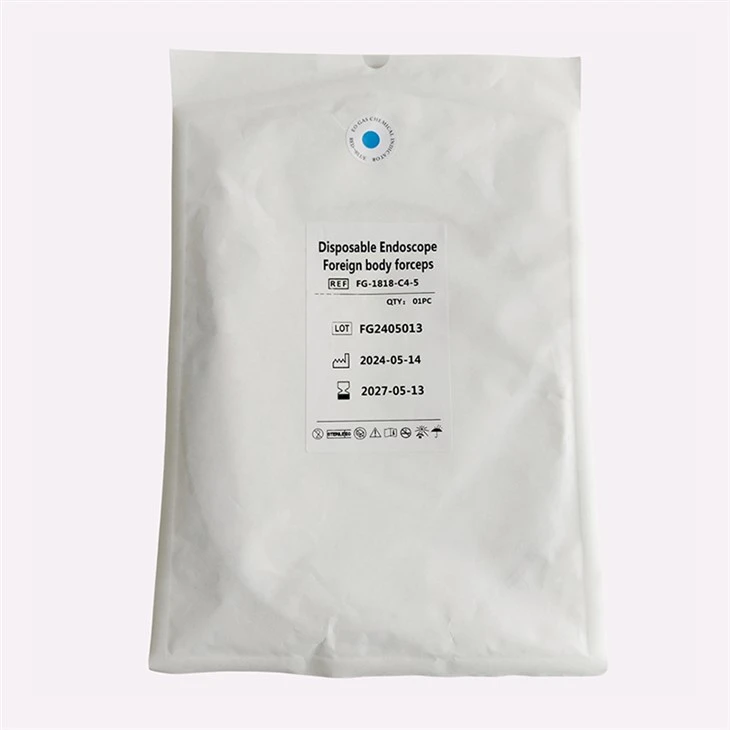

- Tip Design: The tip design of the forceps plays a crucial role in its ability to grasp and hold the foreign object or tissue sample. Different tip designs are available, each with its own advantages and disadvantages. For example, some forceps have a serrated tip for better grip, while others have a smooth tip for less trauma to the surrounding tissues.
- Material: The material used to manufacture the forceps can also affect its performance and durability. High-quality materials such as stainless steel or titanium are commonly used, as they are strong, corrosion-resistant, and easy to clean and sterilize.
- Compatibility: The forceps should be compatible with the endoscope being used. This includes ensuring that the forceps can be inserted through the working channel of the endoscope and that they can be properly attached and detached.
Conclusion
The length of foreign body forceps for endoscopy is a critical factor that can significantly impact their use and effectiveness in medical procedures. Longer forceps provide greater reach, allowing doctors to access deeper anatomical sites, while shorter forceps offer better control and are easier to manipulate. The choice of forceps length should be based on the specific endoscopic procedure being performed, as well as the doctor's experience and preference.
As a supplier of Foreign Body Forceps for Endoscopy, we understand the importance of providing high-quality instruments that meet the diverse needs of our customers. We offer a wide range of forceps in different lengths, tip designs, and materials, ensuring that doctors can find the right instrument for their specific clinical situation.
If you are interested in learning more about our foreign body forceps or other endoscopic instruments, such as Gastrointestinal Endoscopic Hemostatic Clip and Disposable Endoscopic Injection Needle, please feel free to contact us. Our team of experts is available to provide you with detailed information and assistance in selecting the right product for your needs. We look forward to working with you to improve patient care and outcomes.
References
- ASGE Technology Committee. ASGE guideline on the use of endoscopic foreign body removal devices. Gastrointest Endosc. 2017;85(1):1-9.
- Hirota WK, Leighton JA, Dean A, et al. ASGE guideline on the management of ingested foreign bodies and food impactions. Gastrointest Endosc. 2011;73(6):1085-1091.
- Singh H, Baron TH. Endoscopic management of foreign bodies and food impactions. Gastrointest Endosc Clin N Am. 2014;24(3):463-479.