

Hey there! As a supplier of Dental Low Speed Handpiece Motors, I've gotten tons of questions from dentists and dental equipment buyers about how the gear ratio of these motors impacts their speed. So, I thought I'd break it down in this blog post.
First off, let's talk about what a gear ratio is. In simple terms, the gear ratio is the relationship between the number of teeth on two gears that are meshed together. In a dental low - speed handpiece motor, this ratio plays a crucial role in determining how fast the handpiece's tip rotates.
When we have a high gear ratio, say 10:1 or even higher, it means that for every 10 rotations of the motor's input gear, the output gear (the one connected to the handpiece tip) makes just 1 rotation. This results in a significant reduction in speed but an increase in torque. Torque is the rotational force that allows the handpiece to do work, like grinding or polishing teeth. A high - ratio gear system is great for tasks that require a lot of force and precision, such as Root Canal Treatment Reduction Dental Handpiece. When you're working inside a tiny root canal, you need a slow, controlled speed and enough force to remove the infected tissue without damaging the delicate structures.
On the other hand, a low gear ratio, like 1:1 or 2:1, means that the output gear rotates almost as fast as the input gear. This gives you a higher speed but lower torque. Low - ratio gear setups are ideal for tasks that don't need a lot of force but require speed, like quickly removing small amounts of tooth material or performing light polishing. For example, our Low Speed Dental External Series Handpiece can benefit from a lower gear ratio in certain situations.

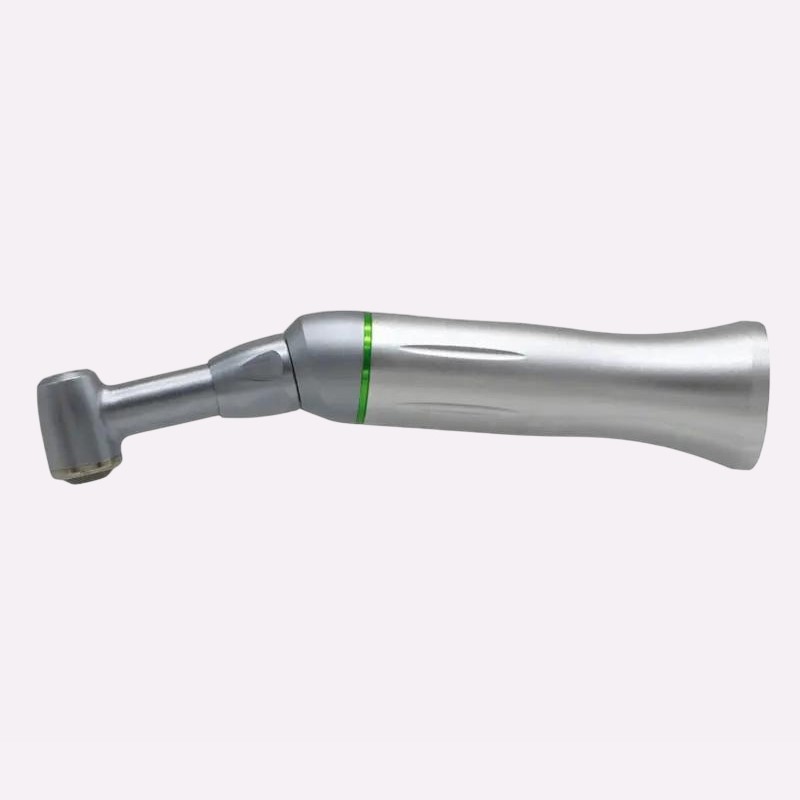
Let's dig a bit deeper into the science behind it. The speed of the handpiece motor is directly related to the power source. Most dental motors are powered by electricity or compressed air. The motor spins at a certain speed, and the gears modify this speed based on the ratio. The formula for calculating the output speed of a gear system is: Output Speed = Input Speed / Gear Ratio. So, if your motor spins at 1000 RPM (revolutions per minute) and you have a 5:1 gear ratio, the output speed will be 1000 / 5 = 200 RPM.
Now, why does this matter in a dental setting? Well, different dental procedures demand different speeds and torques. For instance, when you're preparing a tooth for a crown, you might start with a high - torque, low - speed setting to shape the tooth precisely. Then, you can switch to a lower - ratio gear for a final, quick polish. Our Internal Series Dental Handpiece is designed to handle a variety of gear ratios, allowing dentists to adapt to different clinical needs.
Another factor to consider is the wear and tear on the gears. High - ratio gears tend to experience more stress because they're transferring a large amount of force. This means they might need more frequent maintenance and replacement. Low - ratio gears, while they run at higher speeds, generally have less stress on them and may last longer. However, this also depends on the quality of the materials used in the gear manufacturing. At our company, we use high - grade materials to ensure that our gears, regardless of the ratio, are durable and reliable.
The choice of gear ratio can also affect the overall efficiency of the handpiece. A well - matched gear ratio can optimize the power transfer from the motor to the handpiece tip. If the gear ratio is too high for a particular task, the motor might have to work harder, consuming more energy and potentially overheating. Conversely, if the ratio is too low, the handpiece might not have enough power to perform the task effectively.
When it comes to choosing the right gear ratio for your dental practice, it's important to consider the types of procedures you perform most often. If you do a lot of endodontic work, a high - ratio handpiece will be your best friend. But if you focus more on cosmetic dentistry, a lower - ratio option might be more suitable.
We understand that every dental practice is unique, and that's why we offer a wide range of Dental Low Speed Handpiece Motors with different gear ratios. Whether you're a small private practice or a large dental clinic, we can help you find the perfect motor to meet your needs.
If you're interested in learning more about our products or want to discuss which gear ratio would be best for your specific requirements, don't hesitate to reach out. We're here to assist you in making an informed decision. Contact us today to start a conversation about your dental equipment needs and let's find the ideal solution together.
References
- Dental Equipment Handbook: A Guide to Modern Dental Tools and Their Applications
- Journal of Dental Technology: Gear Ratios and Their Impact on Dental Handpiece Performance