

Hey there! As a supplier of high speed handpieces, I've seen firsthand how these nifty tools deal with different tooth densities. It's a pretty fascinating topic, and I'm stoked to share some insights with you.
First off, let's talk about what high speed handpieces are. They're those little gadgets dentists use to drill into your teeth. They spin really fast, like up to 400,000 revolutions per minute! That's crazy fast, right? But why do they need to spin so fast? Well, it helps them cut through different tooth densities more efficiently.
Teeth aren't all the same density. You've got the enamel, which is the hard outer layer. It's like the armor of your teeth. Then there's the dentin, which is a bit softer and makes up most of the tooth structure. And finally, there's the pulp, which is the soft tissue inside the tooth that contains nerves and blood vessels.
So, how do high speed handpieces handle these different densities? Well, it all comes down to a few key factors.
Speed and Torque
One of the most important things is the speed and torque of the handpiece. Speed is how fast the handpiece spins, and torque is the force that makes it spin. For harder tooth densities like enamel, you need a high speed and high torque. The high speed allows the drill bit to cut through the tough enamel quickly, while the high torque gives it the power to keep going.
On the other hand, when dealing with softer tooth densities like dentin or pulp, you don't need as much speed or torque. In fact, using too much can cause damage to the tooth. That's why many high speed handpieces have adjustable settings. You can dial down the speed and torque when working on softer areas.
Drill Bits
Another crucial factor is the type of drill bit used. Different drill bits are designed for different tooth densities. For enamel, you might use a diamond-coated drill bit. Diamonds are super hard, so they can easily cut through the tough enamel. They also stay sharp for a long time, which is great for efficiency.
For dentin, a carbide drill bit is often a good choice. Carbide is hard but not as hard as diamond, so it's perfect for the softer dentin. It can cut through the dentin smoothly without causing too much damage.
When working near the pulp, you need to be extra careful. There are special drill bits designed for this purpose. They're usually smaller and more precise, so you can avoid hitting the pulp and causing pain or damage.
Cooling and Lubrication
High speed handpieces generate a lot of heat when they're in use. This heat can be harmful to the tooth, especially if it's concentrated in one area. That's why cooling and lubrication are so important.
Most high speed handpieces have a built-in water spray system. The water cools down the drill bit and the tooth, preventing overheating. It also helps to flush away debris, keeping the work area clean.
Lubrication is also crucial. It reduces friction between the drill bit and the tooth, making the cutting process smoother. This not only helps the handpiece work more efficiently but also reduces the risk of damage to the tooth.
Our High Speed Handpieces
At our company, we offer a range of high speed handpieces that are designed to handle different tooth densities with ease. For example, our Single-point Quick Coupling Design High Speed Handpiece is a great option. It has a single-point quick coupling design, which makes it easy to connect and disconnect. It also has adjustable speed and torque settings, so you can customize it for different tooth densities.
Our Dental Air Turbine Handpiece Fiber Optic High Speed Handpiece is another popular choice. It uses an air turbine to generate high speed, and it has a fiber optic lighting system that provides excellent visibility. This is really important when you're working on different tooth densities, as you need to be able to see what you're doing clearly.
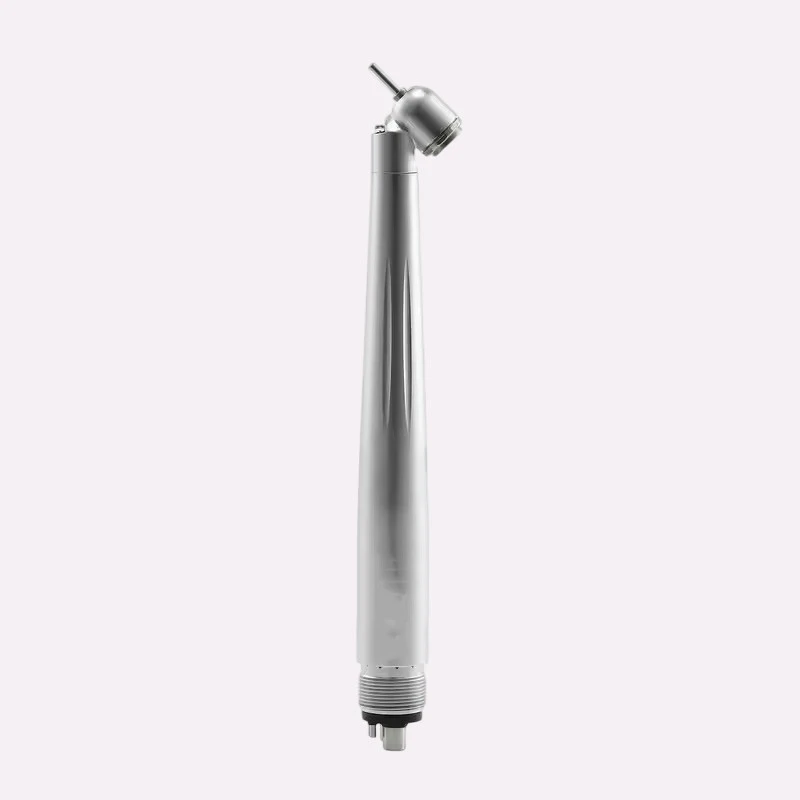
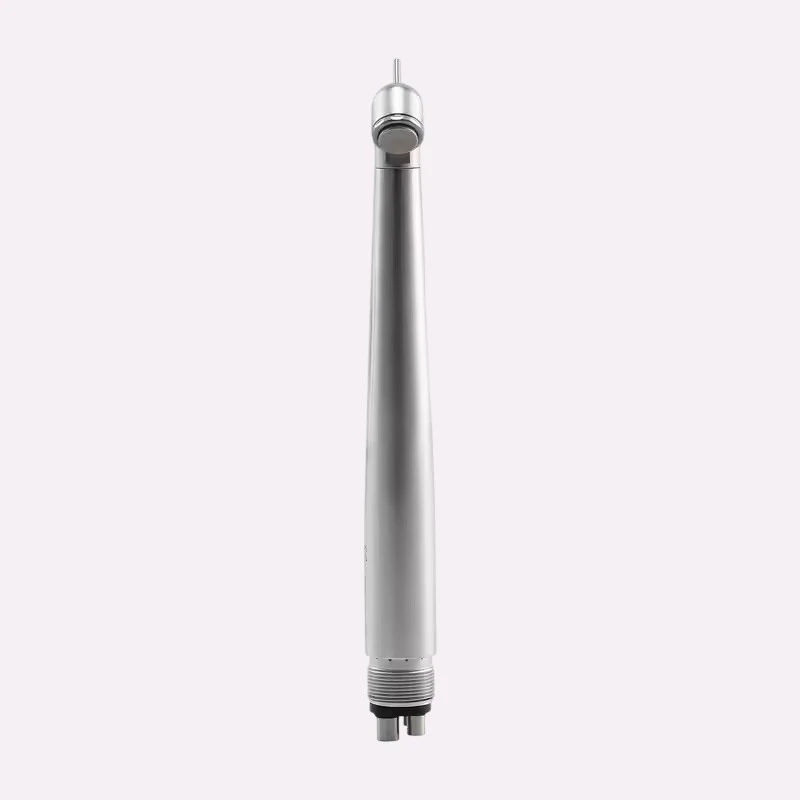
And if you're looking for a handpiece for surgical procedures, our Dental 45 Degree High Speed Surgical Handpiece is the one for you. It has a 45-degree angle, which makes it easier to access hard-to-reach areas. It's also designed to be very precise, so you can handle different tooth densities during surgical procedures with confidence.
Conclusion
In conclusion, high speed handpieces are amazing tools that can handle different tooth densities effectively. By adjusting the speed and torque, using the right drill bits, and ensuring proper cooling and lubrication, dentists can provide high-quality dental care.
If you're in the market for high speed handpieces, we'd love to hear from you. Whether you're a dentist looking to upgrade your equipment or a distributor looking for a reliable supplier, we've got you covered. Just reach out to us, and we can start a conversation about your needs. We're always happy to help and look forward to working with you!
References
- "Dental Materials and Devices: A Clinical Approach" by John M. Powers and Mark W. Douglas
- "Textbook of Operative Dentistry" by Richard G. Craig and John R. Powers