

In the realm of endoscopy, the question of whether foreign body forceps designed for human use can be effectively employed in veterinary endoscopies is a topic that warrants in - depth exploration. As a supplier of Foreign Body Forceps For Endoscopy, I have witnessed firsthand the growing interest in this area, and I am eager to share my insights on this matter.
Compatibility of Design and Function
When considering the use of human endoscopy foreign body forceps in veterinary applications, the first aspect to examine is the design and function compatibility. Human endoscopy forceps are engineered to meet the anatomical and physiological characteristics of the human body. They are typically sized and shaped to navigate through the human digestive tract, respiratory system, and other internal cavities.
In veterinary medicine, the anatomical structures of different animal species vary significantly. For example, the size of the esophagus in a small dog is much smaller than that of a human, while the digestive tract of a large horse has a completely different configuration. This means that the standard size and shape of human endoscopy forceps may not be suitable for all veterinary patients. However, in some cases, such as with medium - to - large - sized animals like pigs or sheep, the dimensions of human forceps may be comparable to the relevant anatomical structures, allowing for potential use.
Functionally, both human and veterinary endoscopies aim to retrieve foreign bodies or perform tissue biopsies. The basic gripping and manipulation functions of foreign body forceps are similar across different applications. Human forceps are designed to provide a secure grip on various objects, whether they are small food particles, polyps, or other foreign matter. This same gripping mechanism can be effective in veterinary endoscopies when dealing with similar types of foreign bodies in animals.
Sterilization and Hygiene Considerations
Another crucial factor is the sterilization and hygiene requirements. In both human and veterinary medicine, strict sterilization protocols are necessary to prevent the spread of infections. Human endoscopy foreign body forceps are designed to withstand rigorous sterilization processes, such as autoclaving or chemical disinfection.
In veterinary practice, the same high - level of sterilization is required. The good news is that if the forceps are made from materials that can tolerate the sterilization methods commonly used in veterinary clinics, they can be safely reused in multiple veterinary procedures. However, it is important to note that some veterinary patients may carry unique pathogens that are not typically found in human patients. Therefore, additional precautions may need to be taken to ensure that the forceps are thoroughly sterilized between different animal species or after handling animals with specific infectious diseases.
Cost - Benefit Analysis
From a cost - benefit perspective, using human endoscopy foreign body forceps in veterinary endoscopies can be an attractive option. Veterinary clinics may face budget constraints, and purchasing specialized veterinary - only endoscopy instruments can be expensive. Human forceps, which are often more widely available and may be more cost - effective, can provide a viable alternative.

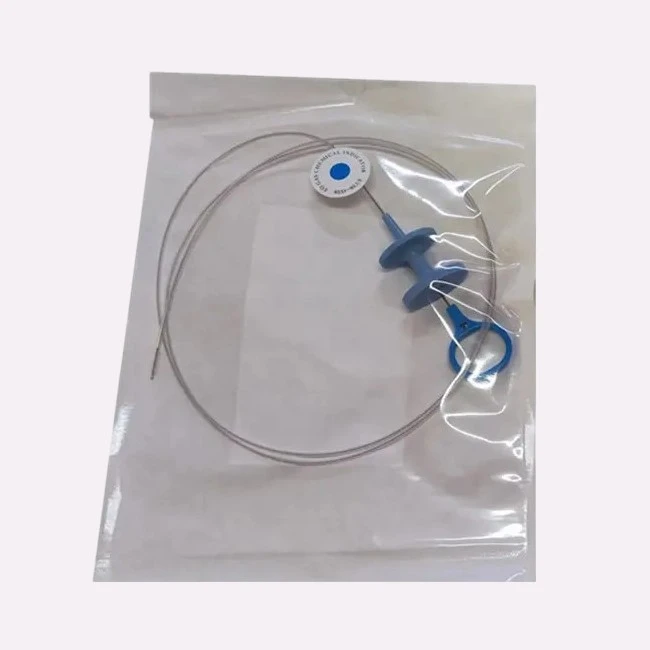
For example, if a veterinary clinic only performs occasional endoscopy procedures, investing in a full set of specialized veterinary endoscopy instruments may not be financially feasible. In such cases, using human forceps can allow the clinic to offer endoscopy services at a lower cost, making it more accessible to pet owners or livestock farmers.
Limitations and Challenges
Despite the potential advantages, there are also limitations and challenges associated with using human endoscopy foreign body forceps in veterinary endoscopies. As mentioned earlier, the anatomical differences between humans and animals can pose significant challenges. The curvature and diameter of the internal passages in animals may require forceps with different flexibility and reach.
Moreover, the behavior and anatomy of animals during the endoscopy procedure can be more unpredictable compared to human patients. Animals may move or struggle, making it more difficult to manipulate the forceps accurately. This requires veterinarians to have a high level of skill and experience in using the forceps in a veterinary setting.
Alternative Veterinary - Specific Instruments
While human endoscopy foreign body forceps can have some applications in veterinary medicine, there are also specialized veterinary - specific instruments available. For example, the Disposable Medical Surgery Hot Biopsy Forceps are designed specifically for veterinary use, taking into account the unique anatomical and physiological characteristics of animals. These forceps may have features such as smaller sizes, more flexible shafts, and better - adapted gripping mechanisms for different animal species.
In addition, the Endoscopic Stone Removal Basket is another specialized instrument that can be used in veterinary endoscopies to retrieve stones or other hard objects from the urinary or biliary tracts of animals. The Endoscopic Cytology Brush is also designed for veterinary use, allowing for more accurate tissue sampling in animals.
Conclusion
In conclusion, the use of foreign body forceps for endoscopy originally designed for humans in veterinary endoscopies is a complex issue with both advantages and limitations. While there are situations where human forceps can be effectively used, especially in medium - to - large - sized animals with compatible anatomical structures, there are also many cases where specialized veterinary - specific instruments are necessary.
As a supplier of Foreign Body Forceps For Endoscopy, I understand the diverse needs of both human and veterinary medical fields. We are committed to providing high - quality products that can meet the requirements of different applications. Whether you are a veterinarian looking for cost - effective solutions or a medical professional interested in the cross - application of endoscopy instruments, we are here to assist you.
If you are interested in learning more about our products or discussing potential procurement options, please feel free to reach out to us. We look forward to the opportunity to engage in procurement discussions with you and help you find the most suitable endoscopy instruments for your needs.
References
- Smith, J. (2018). Comparative Anatomy of Human and Animal Digestive Systems. Journal of Veterinary Anatomy, 25(3), 123 - 135.
- Johnson, A. (2019). Sterilization Protocols in Endoscopy: A Review. Medical Instrumentation Journal, 32(2), 89 - 98.
- Brown, C. (2020). Cost - Effective Solutions in Veterinary Endoscopy. Veterinary Practice Management, 18(4), 56 - 63.