

Hey there! As a supplier in the endoscopy treatment field, I've seen a lot of questions about the differences between flexible and rigid endoscopy treatment. So, I thought I'd break it down for you in a way that's easy to understand.
What are Flexible and Rigid Endoscopes?
Let's start with the basics. A rigid endoscope is, well, rigid. It's made of a solid tube, usually with a light source and a lens at the end. These are often used in situations where a straight path to the area of interest is available, like in the bladder, joints, or the ear, nose, and throat (ENT) areas. They offer high - quality, direct visualization because there's no bending that could distort the view.
On the other hand, flexible endoscopes are, you guessed it, flexible. They're made of a long, bendable tube with fiber - optics or a digital camera at the tip. This flexibility allows them to navigate through the twists and turns of the digestive tract, the respiratory system, and other complex internal structures.
Visualization and Access
One of the biggest differences between the two is how they access and visualize the internal organs. Rigid endoscopes provide a clear, undistorted view of the area they're looking at. Since they're straight, the image quality is often very high, and it's easier to get a precise look at a particular spot. For example, in joint endoscopy, a rigid endoscope can give a detailed view of the cartilage and ligaments inside the joint, which is crucial for diagnosing injuries or diseases.
Flexible endoscopes, however, are all about access. They can reach areas that rigid endoscopes can't. For instance, when examining the colon, a flexible colonoscope can wind its way through the large intestine, reaching all the way to the cecum. This makes them ideal for screening and diagnosing conditions in the digestive system, like polyps or ulcers. But because of the bending and twisting of the tube, the image quality might not be as sharp as that of a rigid endoscope in some cases.
Procedures and Applications
The types of procedures each endoscope is used for also vary significantly. Rigid endoscopes are commonly used in urology, orthopedics, and ENT. In urology, a rigid cystoscope can be used to examine the inside of the bladder for tumors, stones, or other abnormalities. In orthopedics, arthroscopic surgery with a rigid endoscope allows surgeons to repair damaged joints with minimal invasion. In ENT, rigid endoscopes are used to examine the nasal passages, sinuses, and throat.
Flexible endoscopes, on the other hand, are the go - to for gastrointestinal and respiratory procedures. An upper endoscopy, where a flexible endoscope is inserted through the mouth to examine the esophagus, stomach, and duodenum, is a common procedure for diagnosing acid reflux, ulcers, and other digestive problems. A bronchoscopy, using a flexible bronchoscope, can be used to examine the lungs and diagnose conditions like lung cancer or infections.
Patient Comfort
Patient comfort is another important factor. Rigid endoscopes can be a bit more uncomfortable for patients. Since they're not flexible, they require more force to insert, especially in areas where the natural passage is curved. This can cause some pain and discomfort during the procedure. For example, a rigid cystoscopy can be quite uncomfortable for male patients due to the length and rigidity of the tube passing through the urethra.
Flexible endoscopes are generally more comfortable for patients. Their bendable nature allows them to move more smoothly through the body's natural passages, reducing the amount of force needed for insertion. This means less pain and discomfort during the procedure. However, they still require some sedation in many cases, especially for longer or more invasive procedures.
Instrumentation and Treatment
When it comes to treatment, both types of endoscopes can be used with various instruments. Rigid endoscopes often work well with larger, more robust instruments. For example, in arthroscopic surgery, larger forceps and saws can be used through the rigid endoscope to repair damaged joints.
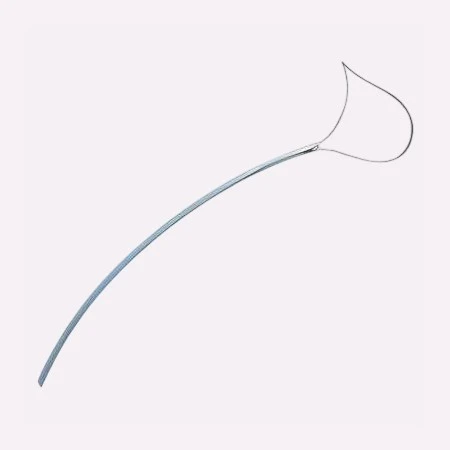
Flexible endoscopes, on the other hand, are used with smaller, more delicate instruments. For instance, an Endoscopic Snare Polypectomy can be performed using a flexible colonoscope. The thin, flexible snare can be passed through the working channel of the endoscope to remove polyps from the colon. Another example is the Endoscopic Cytology Brush, which can be used through a flexible bronchoscope to collect cells for biopsy. And if there are stones in the bile duct or urinary tract, an Endoscopic Stone Removal Basket can be used via a flexible endoscope to retrieve the stones.
Cost and Maintenance
Cost is also a factor to consider. Rigid endoscopes are generally less expensive to purchase. They're simpler in design and don't have the complex bending mechanisms of flexible endoscopes. However, they still require regular maintenance to keep the lenses clean and the instruments in working order.
Flexible endoscopes are more expensive upfront. Their complex design, with fiber - optics or digital cameras and bending mechanisms, makes them costly to manufacture. Maintenance is also more involved. They need to be carefully cleaned and disinfected after each use to prevent the spread of infections, and the delicate components can be easily damaged, leading to higher repair costs.
Which One to Choose?
So, which type of endoscopy treatment is right for a particular patient or procedure? It really depends on the situation. If the area to be examined is straight and easily accessible, a rigid endoscope might be the best choice. It offers high - quality visualization and can work well with larger instruments. But if the area is deep and has a lot of curves, a flexible endoscope is usually the way to go. It can reach places that rigid endoscopes can't and is generally more comfortable for the patient.

As a supplier of endoscopy treatment products, I understand the importance of having the right tools for the job. Whether you're a hospital, a clinic, or a private practice, having access to both flexible and rigid endoscopes, along with the appropriate instruments, is crucial for providing the best possible care to your patients.
If you're in the market for endoscopy treatment products, I'd love to have a chat with you. We can discuss your specific needs, the types of procedures you perform, and find the best solutions for your practice. Contact us to start the procurement discussion and take your endoscopy services to the next level.
References
- Smith, J. (2020). Endoscopy: Principles and Practice. Elsevier.
- Jones, A. (2019). Flexible vs. Rigid Endoscopy: A Comparative Analysis. Journal of Medical Instrumentation.