

Hey there! As a supplier of Endoscopic Stone Removal Baskets in urology, I've seen firsthand how these nifty tools can make a huge difference in treating kidney and urinary stones. Today, I'm gonna break down the key points of using an endoscopic stone removal basket in urology.
1. Understanding the Basics
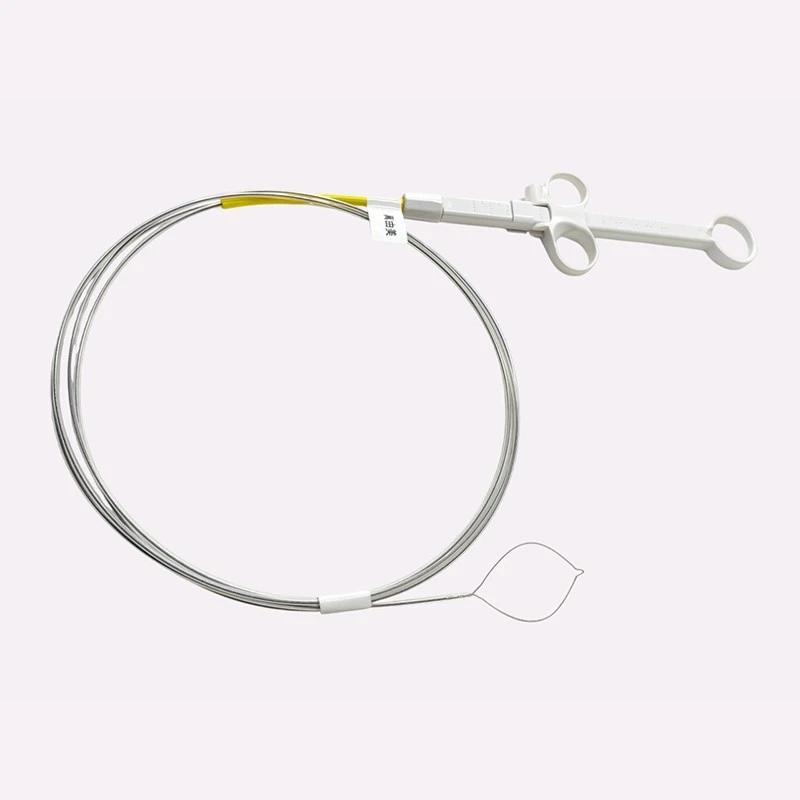
First off, let's get on the same page about what an endoscopic stone removal basket is. It's a medical device used during endoscopic procedures to capture and remove stones from the urinary tract. These baskets come in different shapes, sizes, and configurations, each designed to handle specific types of stones and anatomical variations.
The basic design usually consists of a flexible shaft with a basket at the tip. The basket is made up of wires that can be opened and closed to trap the stone. Once the stone is captured, the basket is withdrawn, bringing the stone out with it.
2. Patient Selection
Not every patient with urinary stones is a good candidate for endoscopic stone removal using a basket. The decision depends on several factors, including the size, location, and composition of the stone, as well as the patient's overall health.
- Stone Size: Generally, baskets work best for stones that are less than 2 cm in diameter. Larger stones may be too big to capture or may require fragmentation first.
- Stone Location: Stones located in the ureter or renal pelvis are more accessible for basket removal compared to those in the calyces of the kidney.
- Stone Composition: Some stones, like calcium oxalate stones, are harder and more difficult to capture than softer stones like uric acid stones.
Before the procedure, the urologist will conduct a thorough evaluation, including imaging studies such as CT scans or ultrasounds, to determine if a basket is the right tool for the job.
3. Pre - Procedure Preparation
Once the patient is selected for the procedure, proper pre - procedure preparation is crucial.

- Informed Consent: The patient should be fully informed about the procedure, its risks, and benefits. This includes potential complications such as bleeding, infection, or damage to the urinary tract.
- Antibiotic Prophylaxis: To prevent infection, patients may be given antibiotics before the procedure, especially if they have a history of urinary tract infections or other risk factors.
- Anesthesia: Depending on the patient's condition and the complexity of the procedure, different types of anesthesia may be used, such as local anesthesia, regional anesthesia, or general anesthesia.
4. Insertion and Navigation
The next step is inserting the endoscopic stone removal basket into the urinary tract. This is done using an endoscope, which is a thin, flexible tube with a light and camera at the end.
- Access: The endoscope is usually inserted through the urethra and advanced into the bladder, then up into the ureter or kidney. This requires careful navigation to avoid damaging the delicate tissues of the urinary tract.
- Visualization: The urologist uses the camera on the endoscope to visualize the stone and the surrounding anatomy. This helps in accurately positioning the basket for stone capture.
It's important to note that the insertion and navigation process requires skill and experience. Urologists need to be familiar with the normal and abnormal anatomy of the urinary tract to avoid complications.
5. Stone Capture
Once the basket is in position near the stone, the urologist carefully opens the basket and maneuvers it around the stone.
- Technique: There are different techniques for stone capture, such as the "over - the - stone" technique or the "around - the - stone" technique. The choice of technique depends on the size and location of the stone.
- Multiple Attempts: Sometimes, it may take multiple attempts to capture the stone, especially if the stone is irregularly shaped or located in a difficult - to - reach area.
During the capture process, the urologist needs to be gentle to avoid dislodging the stone or causing damage to the basket or the urinary tract.
6. Stone Retrieval
After the stone is successfully captured in the basket, the next step is to retrieve it from the urinary tract.
- Slow Withdrawal: The basket is slowly withdrawn through the endoscope and out of the body. This needs to be done carefully to prevent the stone from slipping out of the basket or causing trauma to the urinary tract.
- Fragmentation if Necessary: If the stone is too large to be removed intact, it may need to be fragmented first using a laser or other fragmentation devices. Then, the fragments can be captured and removed using the basket.
7. Post - Procedure Care
After the procedure, patients need proper post - procedure care to ensure a smooth recovery.
- Monitoring: Patients are usually monitored in the hospital for a few hours to check for any immediate complications such as bleeding or pain.
- Fluid Intake: Encouraging patients to drink plenty of fluids helps flush out any remaining stone fragments and prevents urinary tract infections.
- Follow - up: Patients will need to follow up with their urologist for further evaluation, including imaging studies to ensure that all the stones have been removed and to monitor for any recurrence.
8. Complementary Tools and Their Links
In some cases, other endoscopic tools may be used in conjunction with the stone removal basket. For example, Endoscopic Snare Polypectomy can be used for removing polyps or other tissue growths that may be associated with the stone. Foreign Body Forceps for Endoscopy can be handy for retrieving small foreign bodies or additional stone fragments. And Endoscopic Spray Catheter can be used for applying medications or contrast agents during the procedure.
9. Quality and Safety of Our Baskets
As a supplier of endoscopic stone removal baskets, we take quality and safety very seriously. Our baskets are made from high - quality materials that are biocompatible and durable. They undergo strict quality control measures to ensure that they meet the highest standards of performance and safety.
We also offer a variety of basket designs to meet the different needs of urologists and patients. Whether it's a simple basket for small stones or a more complex basket for difficult - to - reach stones, we've got you covered.
10. Contact for Procurement
If you're a urology practice, hospital, or other medical institution looking for high - quality endoscopic stone removal baskets, we'd love to hear from you. We can provide you with detailed product information, samples, and competitive pricing. Just reach out to us, and we'll be happy to start a conversation about your procurement needs.
References
- Smith, A. D., et al. "Clinical guidelines for the management of ureteral calculi." The Journal of Urology, 2016.
- Preminger, G. M., et al. "AUA guideline on management of staghorn calculi: diagnosis and treatment recommendations." The Journal of Urology, 2005.