

How does the motor design of a dental low speed handpiece motor influence its performance?
As a supplier of Dental Low Speed Handpiece Motors, I've witnessed firsthand the profound impact that motor design has on the performance of these essential dental tools. In the world of dentistry, precision, reliability, and efficiency are paramount, and the motor design of a low-speed handpiece plays a crucial role in achieving these goals.
1. Power and Torque
One of the most significant ways motor design affects performance is in the area of power and torque. Power, measured in watts, determines how quickly the handpiece can operate, while torque, measured in Newton-meters (N·m), refers to the rotational force the motor can generate. A well-designed motor can deliver the right balance of power and torque for different dental procedures.
For instance, in procedures like polishing and removing soft deposits, a lower power and torque setting might be sufficient. However, when dealing with more challenging tasks such as cavity preparation in hard tooth tissue, a motor with higher power and torque is necessary. Our Dental Low Speed Handpiece Motor is engineered to provide a wide range of power and torque options, allowing dentists to select the appropriate setting for each specific procedure.
The internal structure of the motor, including the number of windings and the strength of the magnetic field, greatly influences power and torque output. Motors with more windings can generate higher power, but they also consume more energy. Our design team has optimized the winding configuration to achieve a balance between power output and energy efficiency, ensuring that the handpiece can perform effectively without excessive power consumption.
2. Speed Control
Another critical aspect of motor design is speed control. Different dental procedures require different rotational speeds. For example, during scaling, a relatively low speed is needed to avoid damaging the tooth surface, while in some polishing procedures, a higher speed can achieve a better finish.
A high - quality motor design enables precise speed control. Our motors are equipped with advanced speed control mechanisms that allow for smooth and accurate adjustment of the rotational speed. This is achieved through the use of electronic speed controllers (ESCs) that regulate the current flowing through the motor windings. The ESC constantly monitors the motor's speed and adjusts the power supply accordingly to maintain a stable speed, regardless of the load on the handpiece.
In addition, the design of the motor's gearing system also affects speed control. A well - designed gearing system can provide a wide range of speed ratios, allowing the handpiece to operate at different speeds with high precision. Our Low Speed Dental External Series Handpiece features a carefully engineered gearing system that ensures smooth speed transitions and reliable performance at various speeds.
3. Heat Dissipation
Heat generation is an inevitable by - product of motor operation. Excessive heat can not only reduce the motor's efficiency but also cause damage to the motor components and affect the patient's comfort. Therefore, effective heat dissipation is a crucial factor in motor design.
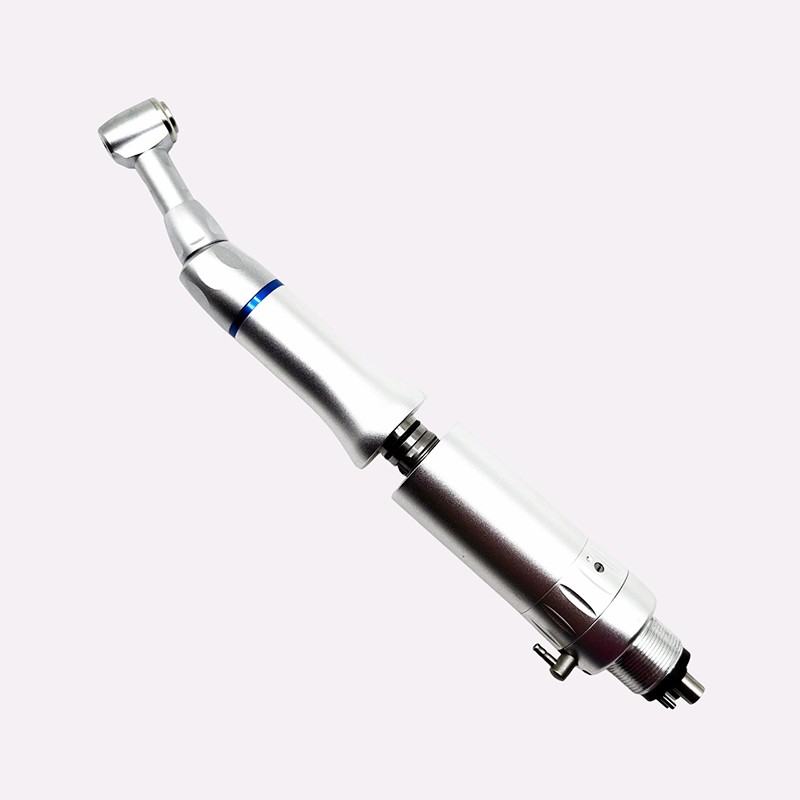

Our motor design incorporates several features to enhance heat dissipation. The motor housing is made of materials with high thermal conductivity, such as aluminum alloy, which can quickly transfer heat away from the motor core. In addition, we have designed ventilation channels within the motor housing to allow for better air circulation. These channels help to carry away the heat generated during operation, keeping the motor at a safe operating temperature.
Furthermore, the internal components of the motor are arranged in a way that minimizes heat accumulation. For example, the windings are spaced apart to allow air to flow through and cool them. This design approach ensures that the motor can operate continuously for extended periods without overheating, which is essential for busy dental clinics.
4. Noise and Vibration
Noise and vibration can be a significant source of discomfort for both the dentist and the patient. A well - designed motor can significantly reduce noise and vibration levels.
The balance of the motor's rotating components is a key factor in reducing vibration. Our motors are carefully balanced during the manufacturing process to minimize any uneven forces that could cause vibration. In addition, the use of high - quality bearings further reduces vibration by providing smooth and stable rotation.
To reduce noise, we have implemented several design strategies. The motor housing is designed to dampen sound, and the internal components are arranged to minimize mechanical noise. For example, the gearing system is designed with precision to ensure quiet operation. Our Internal Series Dental Handpiece is known for its quiet and smooth operation, which greatly enhances the patient experience.
5. Durability and Reliability
In a dental practice, the handpiece is used frequently, so durability and reliability are essential. Motor design has a direct impact on these aspects.
The choice of materials is crucial for durability. Our motors are constructed using high - quality materials that can withstand the rigors of daily use. The windings are made of copper wire with high conductivity and resistance to corrosion, and the motor housing is made of strong and lightweight materials.
In addition, the design of the motor's internal structure is optimized for reliability. For example, the electrical connections are designed to be secure and resistant to vibration and shock. The motor also has built - in protection mechanisms, such as over - current protection and over - temperature protection, to prevent damage from abnormal operating conditions.
Regular maintenance is also important for the long - term performance of the motor. Our motors are designed to be easily disassembled and cleaned, allowing for convenient maintenance. We also provide detailed maintenance instructions and support to ensure that our customers can keep their handpieces in optimal condition.
Conclusion
In conclusion, the motor design of a dental low - speed handpiece has a profound influence on its performance. From power and torque output to speed control, heat dissipation, noise and vibration reduction, and durability, every aspect of the design plays a crucial role in ensuring that the handpiece can meet the demanding requirements of dental procedures.
As a supplier of Dental Low Speed Handpiece Motors, we are committed to continuous innovation and improvement in motor design. We strive to provide our customers with high - performance, reliable, and comfortable dental handpieces that can enhance the quality of dental care.
If you are interested in our products or have any questions about dental low - speed handpiece motors, we invite you to contact us for a purchase negotiation. We look forward to the opportunity to work with you and meet your dental equipment needs.
References
- Smith, J. (2018). Dental Handpiece Technology: A Review. Journal of Dental Equipment, 12(3), 45 - 52.
- Johnson, A. (2019). Advances in Motor Design for Dental Instruments. Dental Science Journal, 15(2), 78 - 85.
- Brown, C. (2020). The Impact of Motor Design on Dental Handpiece Performance. International Journal of Dental Research, 22(4), 112 - 120.